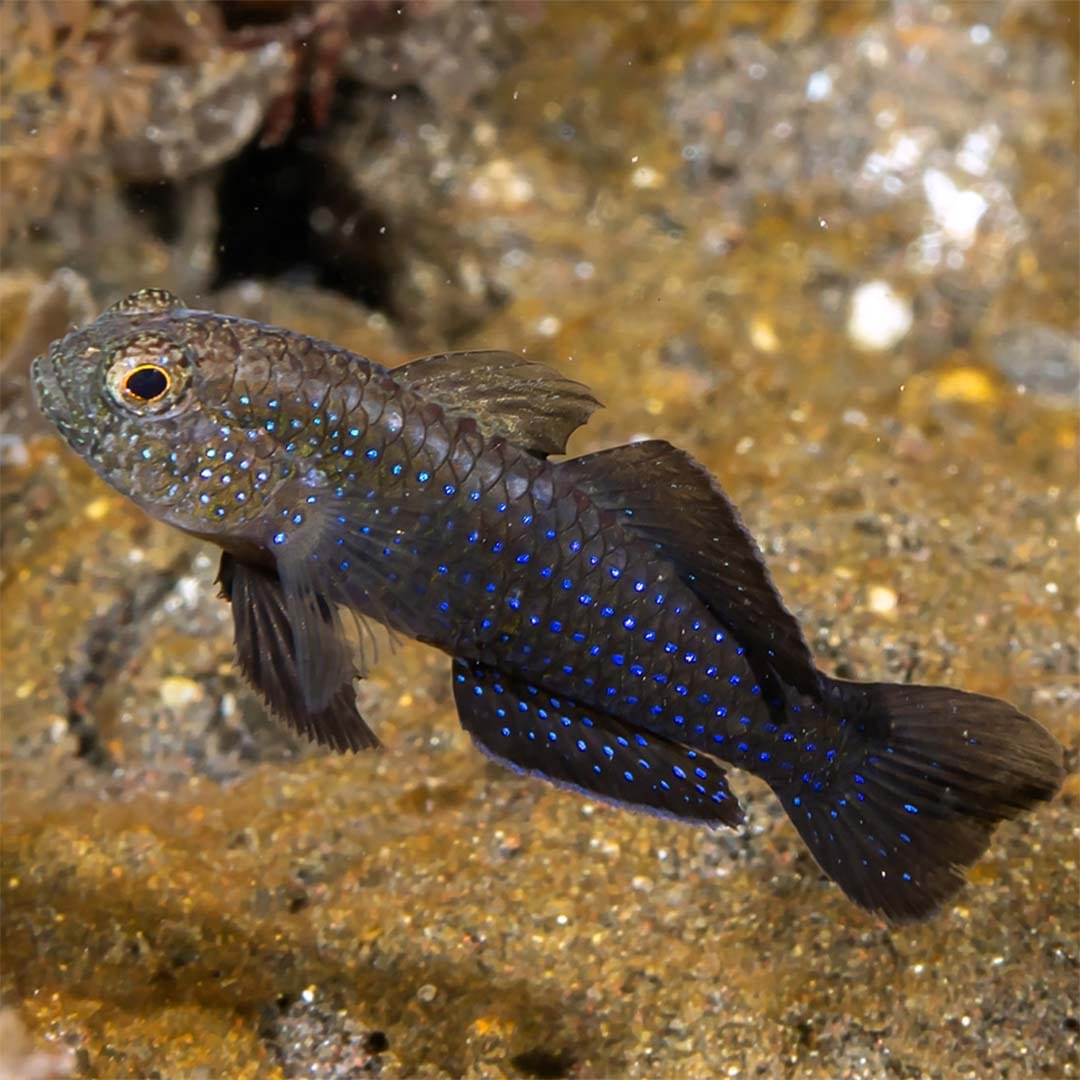
Learn to care for Starry Goby (Asterropteryx semipunctatus). Expert tips on feeding and setup for your saltwater aquarium. Ideal for nano saltwater aquarium.
The Starry Goby (Asterropteryx semipunctatus) is a captivating bottom-dwelling species native to the Indo-Pacific. Known for the tiny white spots scattered across its body that create a “starry” appearance, this fish prefers living near rocks and corals. Its calm nature and small size make it a wonderful choice for nano and medium-sized saltwater aquarium setups, suitable for both beginners and experts.
The Starry Goby is a hardy species that thrives in small to medium environments. A minimum volume of 40 liters (10.5 gallons) is sufficient for a single specimen. However, for a community or multiple gobies, 75–100 liters (20–26 gallons) or larger is recommended. Since its natural habitat consists of sandy bottoms and reef crevices, the saltwater aquarium should feature plenty of hiding spots and cave-like structures.
Maintain water temperatures between 24–27°C (75–81°F). The pH should stay within 8.1–8.4, and salinity at 1.020–1.025 SG. Moderate water movement is preferred. A secure lid is essential because the Starry Goby may jump if startled. Providing a secure environment with live rock or PVC pipes helps this 5 cm (2 inch) fish feel safe and established in its territory.
In nature, this species feeds on small invertebrates and plankton. In a saltwater aquarium, a protein-rich diet including frozen mysis shrimp, brine shrimp, and high-quality pellets is ideal. They typically sift through the sand for food particles, so slow-sinking foods are best. Since they eat slower than aggressive tank mates, targeted feeding might be necessary to ensure they receive adequate nutrition once or twice a day.
This peaceful and shy species usually stays near the substrate or hides within caves. It is reef-safe and does not harm corals or invertebrates. While friendly toward other species, it can be territorial toward its own kind in smaller spaces. Interestingly, they are known to form symbiotic relationships with certain shrimps, sharing burrows for mutual protection. Providing enough space ensures a harmonious environment for all inhabitants.
In the wild, Asterropteryx semipunctatus pairs form to breed, with the male guarding and aerating eggs attached to cave surfaces. While rare in a saltwater aquarium, success requires pristine water quality and a stress-free environment. Spawning usually occurs at night or early morning. The male ensures water flow over the eggs to prevent fungal growth, demonstrating a dedicated parental instinct within the reef ecosystem.
This goby is generally resilient, but sudden temperature shifts or poor water quality can lower its immunity. Common issues like marine ich can be prevented through regular water changes and strict quarantine protocols. Stress indicators include loss of color, hiding for extended periods, or lack of appetite. With proper care, these resilient gobies can live between 3 to 5 years, adding long-term beauty to your reef.
Cover Photo Credit: Randall Spangler
References:
Was this guide helpful?
“Your answer helps us improve our guides.”
Share:
Species Info Box
Temperature
Salinity
pH
Alkalinity
Venomous
Aquarium Size
Maximum Size
Lifespan
Color Form
Reef Compatible
Diet
Temperament
Care Level
Breeding
Genus
Family
Origin
No cookies in this category.
We use cookies to personalize content, provide social media features, and analyze our traffic. We also share information about your use of our site with our analytics partners. You can change your preferences at any time. For more information, please see our Privacy Notice and Cookie Notice. Privacy Notice Cookie Notice
We sent you a confirmation link. Click it to finish subscribing.
