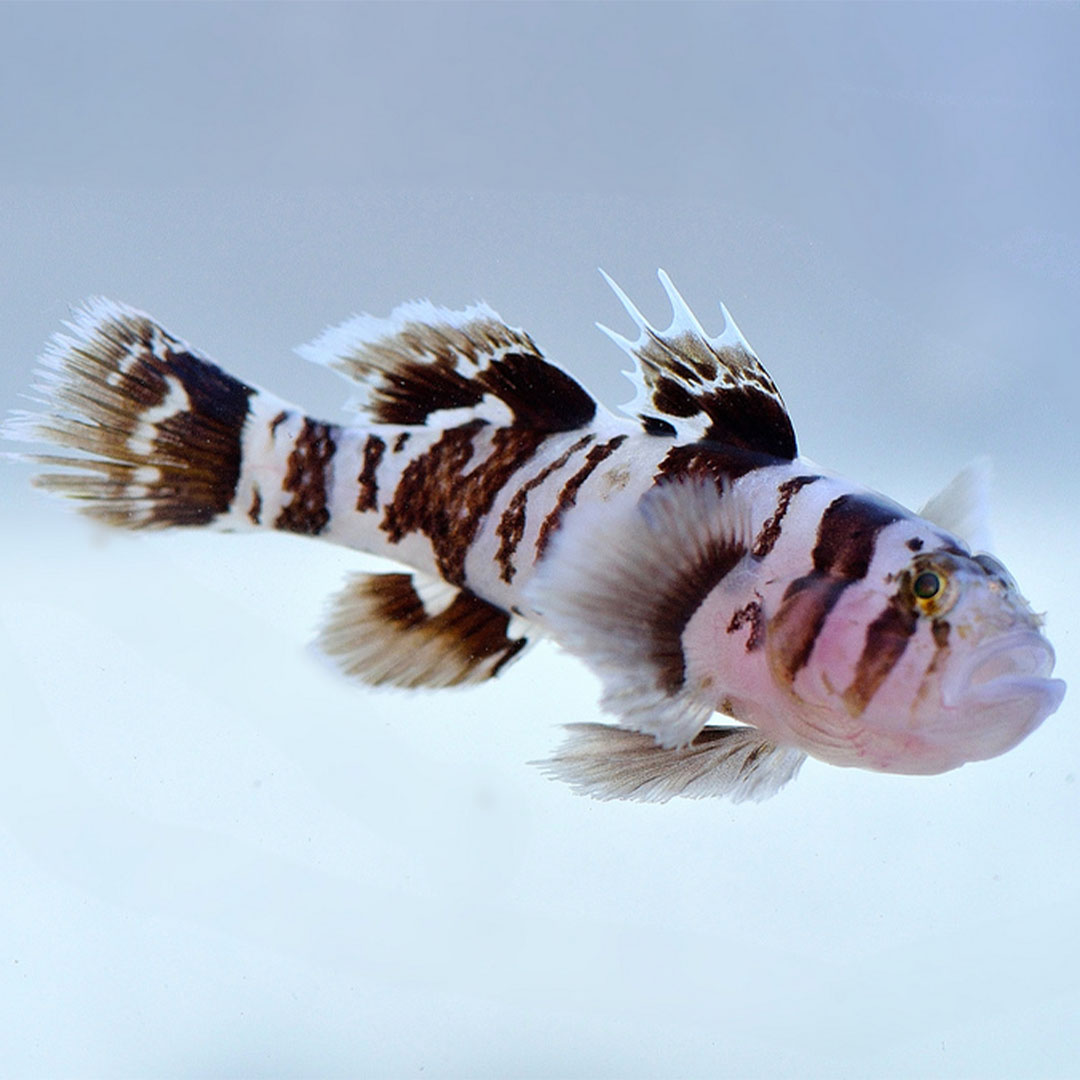
Black Barred Convict Goby (Priolepis nocturna) Care Guide; Learn about its photophobic behavior, carnivore diet, and cave-rich setup for a nano saltwater aquarium.
The Black Barred Convict Goby, scientifically known as Priolepis nocturna, is a captivating and cryptic inhabitant of the Indo-Pacific reefs. Also frequently referred to as the Blackbarred Reef Goby, this species is prized by specialized hobbyists for its striking monochromatic patterns and its unique, cave-dwelling lifestyle. Its specific epithet, nocturna, highlights its strong photophobic (light-avoiding) nature, as it spends the majority of daylight hours tucked away in the deepest recesses of the reef matrix. For those seeking a hardy, small-bodied resident that adds a layer of mystery to a nano reef, this goby is an exceptional candidate.
To successfully house the Black Barred Convict Goby, a minimum tank volume of 38 liters (10 gallons) is required for a single specimen. However, to observe more natural behaviors and ensure long-term stability, a 75-liter (20-gallon) system is preferred. The absolute priority for this species is the aquascape; it requires a “honeycomb” of live rock with numerous shaded crevices, overhangs, and small caves. They are often observed perched upside down on the ceilings of caves, utilizing their fused pelvic fins as a suction disk to remain secure in higher-flow areas.
Water parameters must remain stable to mirror its tropical reef origins: temperature should be maintained between 24–27°C (75–81°F), pH at 8.1–8.4, and salinity at 1.020–1.025 sg. Moderate to high water flow is beneficial, as it simulates the oxygen-rich environments of the reef slopes where they naturally occur. While they are sensitive to intense, direct lighting, they adapt well to standard reef lighting as long as deep-shadow zones are provided for retreat.
Priolepis nocturna is a specialized carnivore that employs a “sit-and-wait” predatory strategy. In the wild, they hunt for microscopic crustaceans, zooplankton, and benthic invertebrates that drift near their caves. In a saltwater aquarium, they should be offered a variety of high-protein meaty foods. Frozen mysis shrimp, vitamin-enriched brine shrimp, and cyclops are staples. Due to their shy nature, it is often necessary to use a feeding pipette or “target feed” directly into their cave entrance to ensure they are not outcompeted by more active surface-feeders. They generally do not accept flake food, though some individuals may eventually transition to high-quality micro-pellets (under 1 mm).
This goby is exceptionally peaceful toward other species but can be quite territorial toward its own kind. In a nano aquarium, it is best kept as a single individual. If multiple specimens are intended for a larger system, the rockwork must be divided into distinct “territories” with visual barriers to prevent constant agonistic behavior. They are 100% reef-safe and will not disturb corals, anemones, or ornamental shrimp. Ideal tank mates include other peaceful nano-fish such as firefish, blennies, and small cardinalfish. Avoid housing them with aggressive dottybacks or large wrasses that might bully them or prevent them from coming out to feed.
The reproductive strategy of the Black Barred Convict Goby is a classic example of paternal care. The female deposits adhesive eggs onto a flat surface within a narrow crevice or empty barnacle shell, after which the male takes full responsibility for the nest. The male diligently fans the eggs with his pectoral fins to provide oxygen and protects them from potential predators until they hatch. While spawning in the home aquarium is rare, it is most likely to occur in systems with very low traffic and highly stable parameters. Successfully raising the larvae is technically demanding, requiring a dedicated larval tank and a steady supply of live rotifers and copepod nauplii.
While traditionally considered a resilient species, Priolepis nocturna is susceptible to common marine parasites such as Marine Ich (Cryptocaryon irritans) and Velvet, particularly during the stress of initial acclimation. Their cryptic nature can make it difficult to spot early symptoms, so a mandatory 4-week quarantine period for new arrivals is essential. One specific health risk is malnutrition; if the goby is too intimidated to leave its cave for food, it may slowly waste away. Monitor for a “sunken belly” and ensure target feeding is successful. With proper care and a stress-free environment, they can live for 3 to 5 years in captivity.
Cover Photo Credit: LemonTYK
References:
Was this guide helpful?
Like, save to your profile and reach more people.
Share:
Species Info Box
Temperature
Salinity
pH
Alkalinity
Venomous
Aquarium Size
Maximum Size
Lifespan
Color Form
Reef Compatible
Diet
Temperament
Care Level
Breeding
Genus
Family
Origin
We use cookies to personalize content, provide social media features, and analyze our traffic. We also share information about your use of our site with our analytics partners. You can change your preferences at any time. For more information, please see our Privacy Notice and Cookie Notice. Privacy Notice Cookie Notice
We sent you a confirmation link. Click it to finish subscribing.
