


$26.00
Allen’s Damselfish (Pomacentrus alleni) Care: Guide: Learn about iridophore color biology, reef-safe behavior, and the peaceful nature of this blue Indo-Pacific gem.
Share:
Featured Info
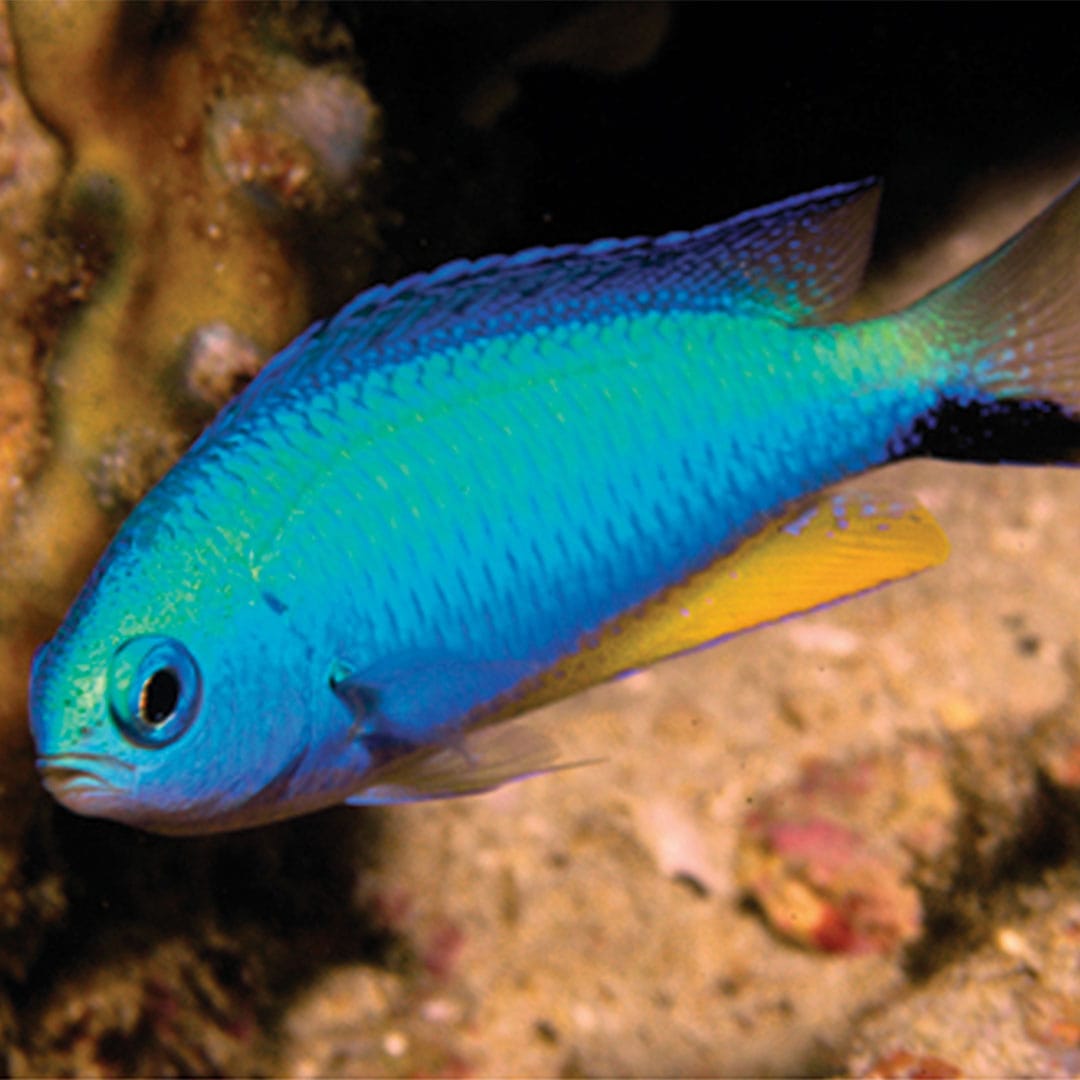
The Allen’s Damselfish, scientifically known as Pomacentrus alleni, is a mesmerizing “blue jewel” of the Indo-Pacific. Named in honor of the legendary ichthyologist Dr. Gerald R. Allen, this species is a favorite among both novice and veteran aquarists. While many damselfish are notorious for their aggressive temperaments, P. alleni is celebrated for being one of the more peaceful and reef-safe members of the Pomacentridae family. Found primarily in the shallow, coral-rich waters of the eastern Indian Ocean and Indonesia, this fish adds a dynamic flash of metallic blue and neon green to any saltwater system.
For a single Allen’s Damselfish, a minimum tank size of 75 liters (20 gallons) is required. However, if you intend to keep a small group or a mixed community, a volume of 150 liters or more is highly recommended to manage their natural territorial instincts. The most critical environmental factor is the replicate of their high-energy reef habitat: they thrive in moderate-to-strong water flow with plenty of live rock.
Scientifically, the stunning blue color of P. alleni is produced by iridophore cells (structural coloration) rather than simple pigments. To maximize their brilliance, use full-spectrum LED lighting with a strong blue peak (420–460 nm). Water parameters should be kept stable: temperature at 22.5–25.5°C, pH at 8.1–8.4, and an alkalinity of 8–12 dKH to provide a strong bicarbonate buffer against CO₂ fluctuations. A secure lid is recommended, as active swimmers can occasionally jump when startled.
Allen’s Damselfish is an omnivore that requires a balanced diet to maintain its high metabolic rate and structural coloration. For optimal health and immunity, their diet should ideally consist of at least 45% crude protein.
Daily Staples: High-quality marine pellets or flakes.
Color Enhancement: Spirulina-enriched foods and preparations containing carotenoids are essential to maintain the vibrant orange and yellow accents on their fins.
Meaty Foods: Supplement 2–3 times daily with frozen mysis shrimp, artemia, and cyclops. In a mature reef, they will also forage on naturally occurring zooplankton and filamentous algae, but they should never be left to rely solely on “tank scraps.”
Unlike many “bully” damsels, the Allen’s Damselfish is remarkably peaceful toward most tank mates. They exhibit substrate-attached territoriality, meaning they will defend a specific cave or rock perch rather than patrolling the entire tank looking for a fight. They are excellent companions for gobies, blennies, and peaceful wrasses.
However, they may show aggression toward other Pomacentrus species or damselfish with similar color patterns if the tank is too small. They are 100% reef-safe and will not harm corals, anemones, or ornamental shrimp. To keep a group, introduce all individuals at the same time to prevent a single fish from establishing a “dominant” territory that excludes others.
Pomacentrus alleni is one of the few damselfish species that frequently spawns in home aquaria. They are demersal spawners, meaning the female deposits a mass of adhesive eggs (usually 100–300) onto a flat, cleaned rock surface. The male then takes on the role of the devoted protector. During the 3–5 day incubation period, the male aggressively guards the nest and uses his pectoral fins to fan the eggs, ensuring a constant flow of oxygenated water. While spawning is common, raising the planktonic larvae to adulthood requires a specialized setup with live rotifers and copepod nauplii.
While traditionally considered a “bulletproof” starter fish, Allen’s Damselfish has a slightly thinner mucus barrier compared to some other Pomacentrids, making it averagely susceptible to Marine Ich (Cryptocaryon irritans). Stress from poor water quality or aggressive tank mates can trigger a decline in their structural color—often misdiagnosed as disease, this “fading” is usually a sign of cortisol-driven stress. A 14–21 day quarantine period for new arrivals is non-negotiable to prevent the introduction of parasites like Velvet or Ich into your display reef.
Cover Photo Credit: Gerald R. Allen
References:
Share Your Experiences! If you have kept this species before or if it is currently an inhabitant of your aquarium, please share your tips and experiences with us and fellow aquarists in the comments section below.
Whether you are a novice hobbyist or an experienced aquarist, feel free to start your own thread and ask questions in our Saltwater Aquarium Forum for help, advice, or guidance. We are here for you and more than happy to help!
Temperature
Salinity
pH
Alkalinity
Diet
Temperament
Care Level
Genus
Family
Breeding
Origin
Color Form
Get in Touch

Awesome! You’re officially part of the crew. 🌊
You’ve successfully subscribed to the Reef Network newsletter. While we prep the latest updates for you, why not dive into the community? Say hello in the Forum or discover new species in our Encyclopedia!
Don’t forget to check your inbox! If you can’t find our mail, it might be hiding among the corals (check your spam folder). 🐠