
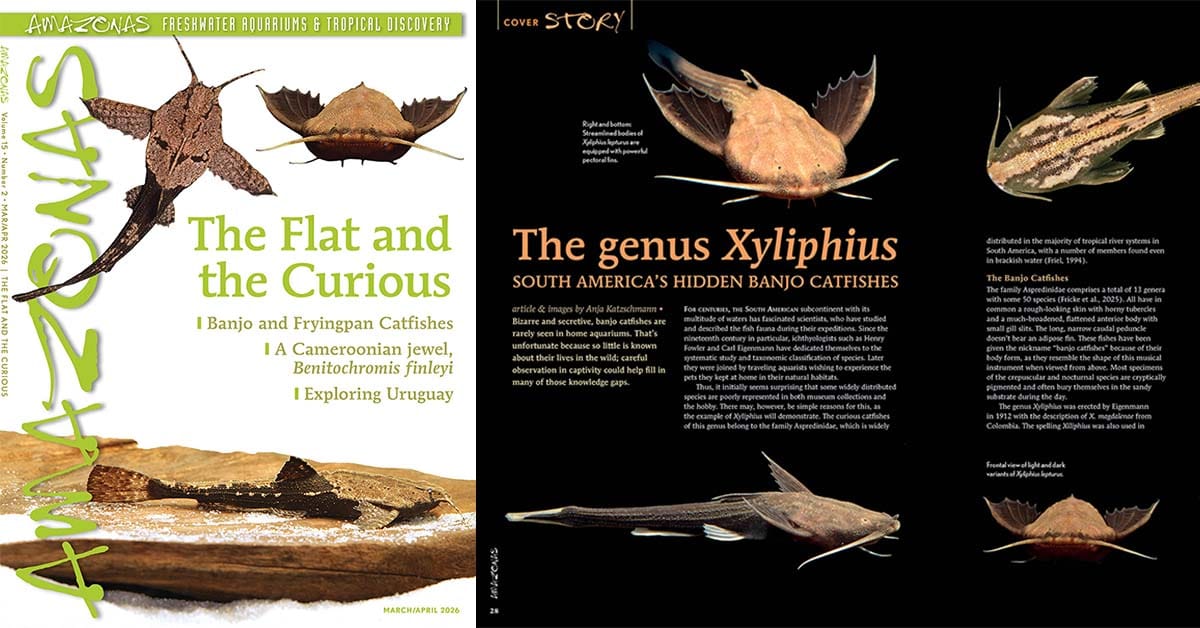

In the AMAZONAS Magazine / The Flat and the Curious issue, Alex Rose explores the fascinating world of cryptic species, highlighting how extreme camouflage in banjo and fryingpan catfishes serves as a window into adaptive evolution. While providing a lifelike aquarium for these masters of disguise is a unique challenge, Rose emphasizes the reward of observing their strangeness in The Flat and the Curious.
Aquatic Notebook
A Day and a Half at OCA
Alex Rose shares her experiences at the Ohio Cichlid Association (OCA) event, highlighting the educational opportunities for cichlid and catfish enthusiasts. Specifically, she notes that Heinz Büscher’s presentation on Tanganyikan cichlids, which combined scientific X-ray imagery with natural observations, is invaluable for increasing knowledge within the aquarium hobby. This feature in The Flat and the Curious underscores the importance of building new friendships and expertise.
Unmasking Hidden Diversity in Pecos Gambusia
In The Flat and the Curious, Michi Tobler explains how genomic research on the endangered Gambusia nobilis revealed that what was thought to be a single species is actually three distinct species. The author states that this discovery is vital for conservation strategies and emphasizes the urgent need for habitat protection to save these rare creatures whose numbers have significantly declined.
New Freshwater Fishes of Turkey
Evaluating the report on Turkey’s freshwater biodiversity in The Flat and the Curious, Alex Rose states that the number of defined species has risen from 236 to over 400 in the last twenty years. This hidden diversity, uncovered through modern genetic tools and fieldwork, proves Turkey’s unique position while highlighting the importance of global partnerships for protecting undiscovered species.
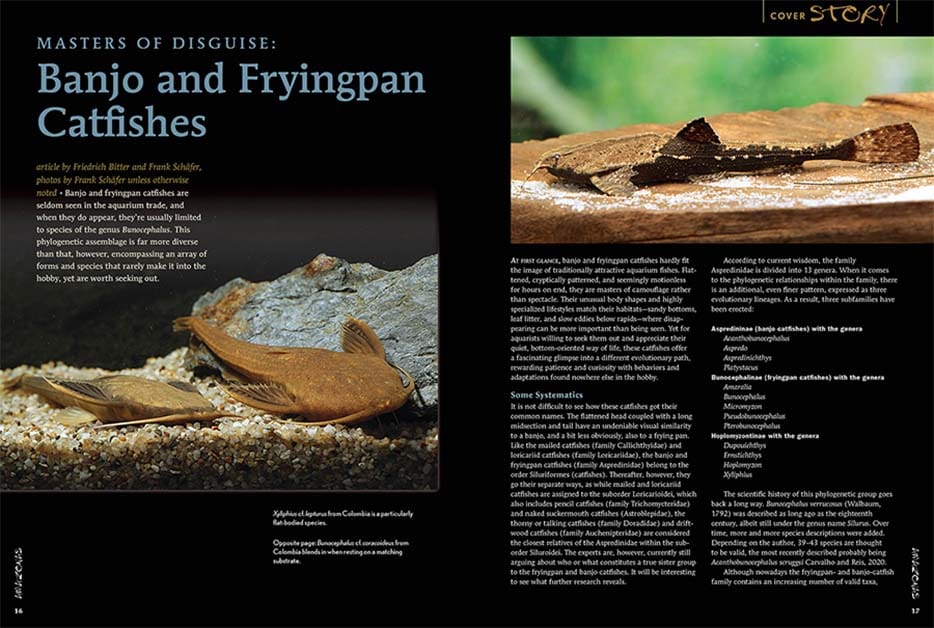
Masters of Disguise: Banjo and Fryingpan Catfishes
In The Flat and the Curious issue, Friedrich Bitter and Frank Schäfer unveil the mysterious world of banjo and fryingpan catfishes across 13 genera. The authors emphasize that these camouflage masters are not just Bunocephalus species, showcasing a vast diversity from 30 cm (12 inches) active swimmers to egg-thieving Amaralia. While reading The Flat and the Curious, you will understand exactly why these quiet bottom-dwellers require an aquarium of at least 100 x 50 cm (40 x 20 inches) with sandy substrates and adequate current.
The authors’ tips on temperatures between 20–27°C (68–80.5°F) and nocturnal feeding routines are invaluable for those keeping these rare species. Discovering unique breeding strategies will surely spark your curiosity. Reminding us that breeding remains a mystery in the hobby, the authors in The Flat and the Curious invite you to join this quiet adventure and perhaps achieve a success that will go down in aquatic history.
The Genus Xyliphius: South America’s Hidden Banjo Catfishes
As detailed in The Flat and the Curious issue, Anja Katzschmann unveils the mysterious world of the Xyliphius genus, nicknamed the “piece of wood.” The author skillfully explains how these 15 cm (6 inches) banjo catfishes adapted to dark waters with their atrophied eyes and sensory structures. As you read The Flat and the Curious, you will discover why these “ghost” species remain rare even in museum collections and stay a mystery within the aquarium hobby.
Katzschmann’s field notes provide critical clues about habitats at depths of 35–45 meters (115–148 feet) and sandy substrates at 27–28°C. Her emphasis on their “cryptic” lifestyle clearly demonstrates the importance of using fine sand and current in your home aquarium. Furthermore, her advice in The Flat and the Curious on nocturnal pipette feeding makes this article an essential guide for any aquarist interested in protecting rare biodiversity.
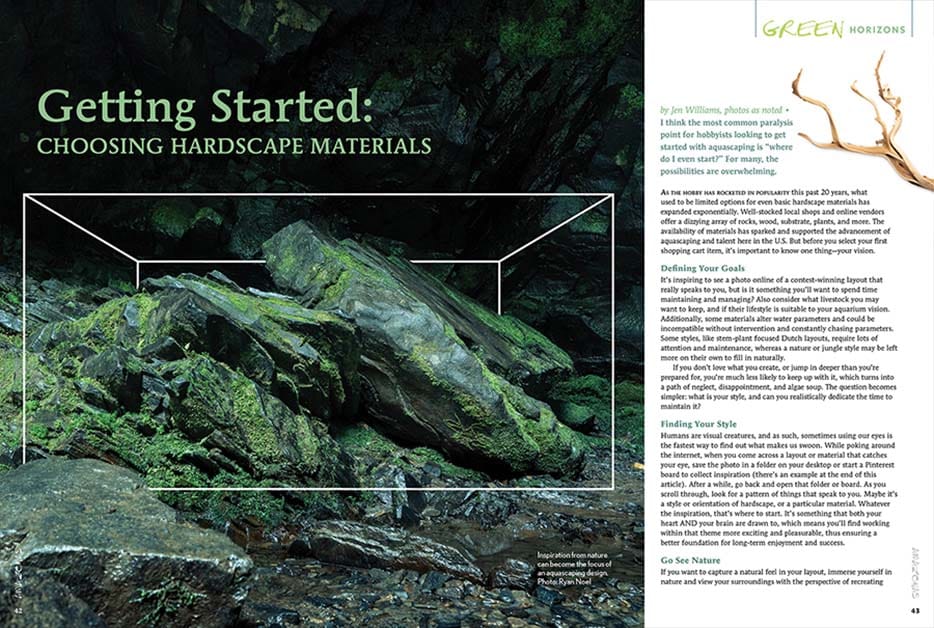
Getting Started: Choosing Hardscape Materials
In this guiding article from The Flat and the Curious, Jen Williams sheds light on the confusion faced by hobbyists new to aquascaping. The author emphasizes that the foundation of a successful layout lies in having a clear vision before filling a shopping cart. While reading The Flat and the Curious, you will find tips on how collecting inspirational images online and using nature as a “dojo” to examine how rocks, plants, and sand intersect can enhance your skills.
Williams draws attention to the fact that hardscape materials have chemical effects. She reminds us that limestone-based stones like Seiryu can raise pH and KH levels, whereas materials like lava rock or Ohko remain inert. The author’s practical warnings in The Flat and the Curious, especially regarding the cleaning of Ohko stone and the risk of lava rock scratching the glass, serve as a manual to prevent technical hiccups when setting up an aquarium.
The Biology and Breeding of Benitochromis finleyi
In this comprehensive guide within The Flat and the Curious, Michel C. W. Keijman explores the vibrant world of Benitochromis finleyi, a West African cichlid. The author details how this species, reaching 10–12 cm (4–5 inches), stands out with its complex brood-care behaviors. While reading The Flat and the Curious, you will find insights into their natural habitats, emphasizing the need for high oxygen levels and temperatures between 25.8–29.5°C (78–85°F).
The article highlights that these fish are biparental mouthbrooders, guarding 100–150 eggs. For a successful setup, Keijman recommends a 1.5-meter (60-inch) long environment with smooth rocks and fine sand. As wild habitats face threats from pollution, keeping this peaceful feeder in an aquarium becomes even more significant. This content in The Flat and the Curious serves as a perfect roadmap for aquarists looking to sustain a rare species that rewards patience.
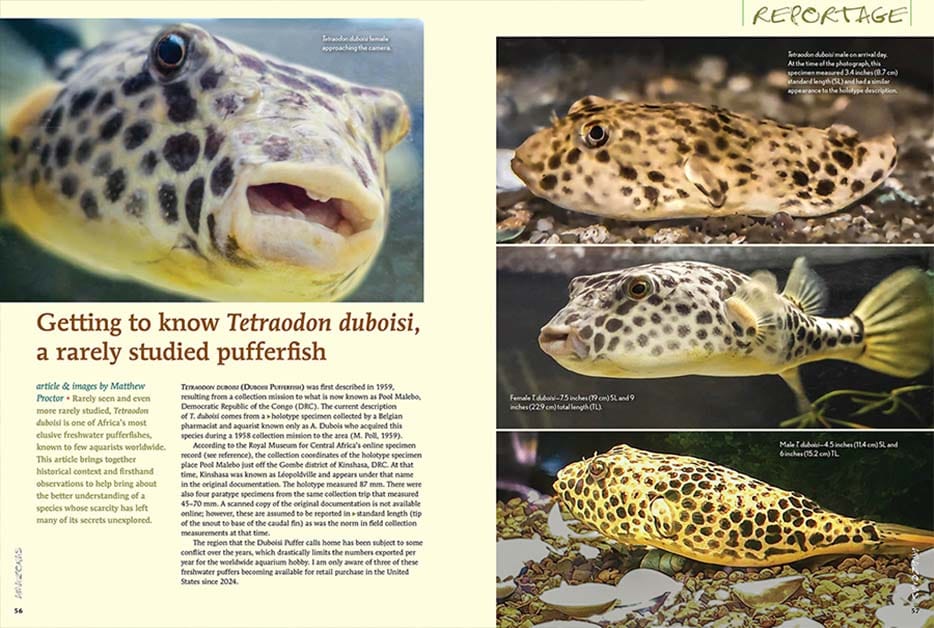
Getting to Know Tetraodon duboisi: A Rare Pufferfish
In this captivating article from The Flat and the Curious, Matthew Proctor explores the elusive world of Tetraodon duboisi, a freshwater pufferfish from the Congo River basin. The author highlights the species’ extreme rarity, noting that adult females reach 30 cm (12 inches) and males around 15 cm (6 inches). While reading The Flat and the Curious, you will discover the unique personality of these puffers, which often greet their keepers with interactive behaviors.
Proctor provides essential husbandry tips, emphasizing that an aquarium of at least 227 liters (60 gallons) with a fine sandy substrate is vital for their well-being. The article in The Flat and the Curious details a diverse diet of snails and worms, crucial for maintaining their health. As Proctor documents his journey toward captive breeding, his insights offer a rare roadmap for anyone lucky enough to encounter this “holy grail” of pufferfishes.
Reunion with Uruguay: Killifishes, Catfishes, and More
In this exploration within The Flat and the Curious, Wolfgang Staeck ventures deep into Uruguay’s freshwater ichthyofauna to highlight the country’s diverse killifishes and catfishes. The author describes his 2024 rediscovery of rare annual killifishes in ephemeral pools. While reading The Flat and the Curious, you will find fascinating insights into the unique locomotion of darter tetras, which “hop” along the bottom due to their specialized swim bladders, perfectly adapted for fast-flowing streams.
The article also covers essential aquarium plants like the Uruguay Amazon Sword. Staeck emphasizes the importance of understanding water parameters and ecological niches, providing a roadmap for those interested in South American biodiversity. His documentation in The Flat and the Curious serves as both a scientific record and a practical guide for hobbyists looking to recreate these natural environments, highlighting biological treasures worth protecting.
Protecting Peatlands: Habitats, Fish Breeding, and Responsibility
In this insightful article in The Flat and the Curious, Rudolf Suttner traces the connections between peatlands and the successful breeding of species like the Butterfly Barb. Suttner explains how these nutrient-poor, acidic environments create the near-sterile conditions essential for egg development. While reading The Flat and the Curious, you will learn about peat formation and how these habitats act as massive carbon sinks, sequestering more CO2 than all the world’s forests combined.
The author provides advice for any aquarium keeper looking for sustainable alternatives to wild-harvested peat, such as using long-fiber coconut husk or botanicals like Alder cones. These materials mimic the humic-rich, soft water found in natural peat bogs while reducing the environmental impact. Suttner’s journey in The Flat and the Curious serves as a reminder that the species we cherish are inseparable from their habitats, urging aquarists to become stewards of natural history.
A World in Miniature: Why Tiny Fishes Deserve Our Attention
As highlighted in The Flat and the Curious, the focus shifts to “miniature fishes”—species generally under 4 cm (1.5 inches) that are vital bio-indicators of ecosystem health. While reading, you will discover extraordinary species like Paedocypris progenetica, the world’s smallest fish, and the transparent Danionella. The article in The Flat and the Curious underscores the precarious status of many small species, such as the Critically Endangered Redfin Blue-Eye.
For the aquarium hobbyist, these “hidden jewels” are gateways to understanding threatened wetlands, springs, and peat swamps. Protecting these tiny creatures means safeguarding entire food webs and diverse microhabitats that might otherwise vanish unnoticed. This content in The Flat and the Curious serves as a rallying cry to recognize that conservation success often starts with noticing the smallest details in our freshwater systems, ensuring their survival for the future.
AMAZONAS Magazine is one of the world’s leading print publications for the freshwater aquarium industry. If you’d like to subscribe and read all the content, you can start your Subscription Here. You can find the previous issue, Equatorial Fishes / AMAZONAS Magazine Review Here! We’re eagerly awaiting the next issue!
Join the Discussion! Do you have a question or a tip to share about “The Flat and the Curious / AMAZONAS Magazine Review” Whether you’re a beginner or a professional, we value your experience—leave a comment below to help our community grow! For more personalized advice and in-depth discussions, feel free to start your own thread in the Saltwater Aquarium Forum. We’d be happy to help you. Let’s build a better reef together!
Cover Photo Credit: Reef Network
References:
- AMAZONAS Magazine: The Flat and the Curious / Last Access Date: 08.02.2026