

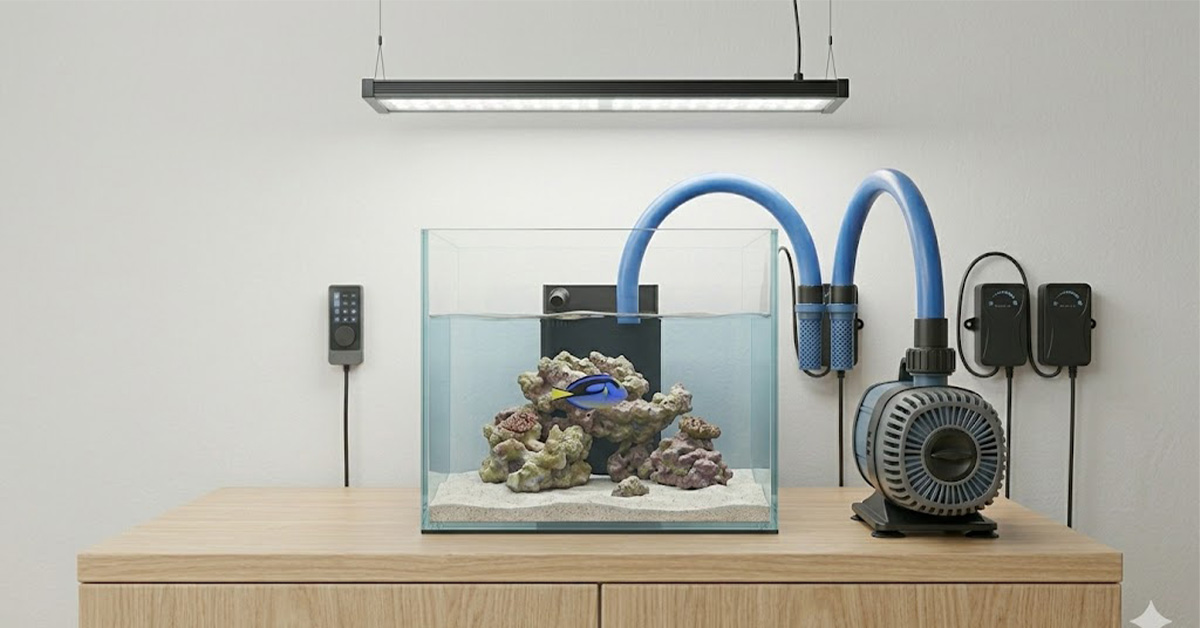

The return pump is the most vital component of any healthy saltwater aquarium setup. It acts as the heart, constantly circulating water between the filtration area and the main display. This movement ensures proper oxygenation, temperature stability, and efficient nutrient export. Understanding that a correct saltwater aquarium return pump selection is a critical step for a successful saltwater aquarium setup will save you from many technical issues in the future. A high-quality pump maintains the biological life of your aquarium 24 hours a day, 7 days a week. Selecting a reliable model is not just about moving water; it is about creating a consistent environment where your delicate corals and fish can thrive without sudden flow interruptions.
Saltwater Aquarium Return Pump Selection and Flow Rules
The gold standard for a successful system is a flow rate between 5 and 10 times your total water volume per hour. For instance, if you have a 200 Liter (53 Gallon) saltwater aquarium, you need a pump delivering a net flow of 1000 L/H (264 GPH) to 2000 L/H (528 GPH). However, the “head pressure” is a critical factor often ignored by beginners. As water travels up through 150 cm (59 Inch) of plumbing, gravity and friction reduce the pump’s actual output. A pump rated for 3000 L/H might only deliver 1500 L/H once installed. Always consult the flow chart provided by the manufacturer to ensure your saltwater aquarium return pump selection accounts for these inevitable losses.
Why Modern DC Pumps Are the Smart Choice
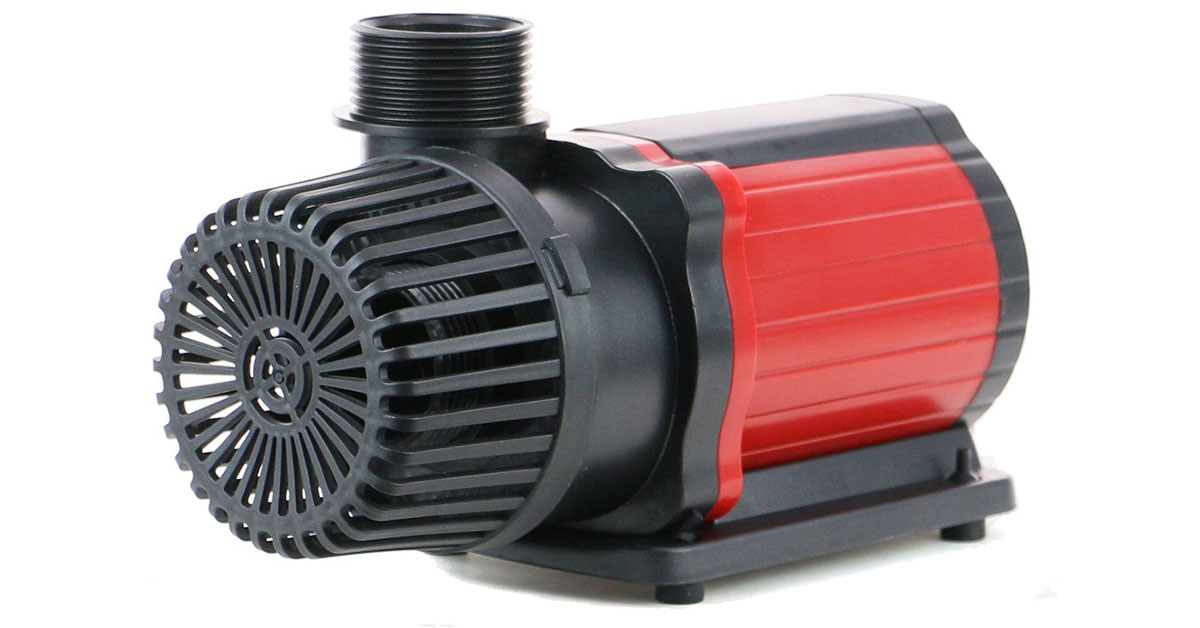
In recent years, the saltwater aquarium return pump selection trend has shifted heavily toward DC (Direct Current) technology. Unlike traditional AC pumps, DC models allow for precise electronic speed control. You can easily slow down the flow during feeding times with a single button. They are significantly quieter, which is essential if your saltwater aquarium is located in a living room or bedroom. Most high-end DC pumps also feature “soft start” technology and automatic shut-off sensors if the pump runs dry. Although the initial cost is higher, the energy efficiency and silent operation provide much better value over the long-term life of your aquatic hobby.
Internal and External Pump Styles: Which One Fits?
Choosing the physical placement of your motor is a key step in your saltwater aquarium return pump selection process. Depending on your sump design and cooling requirements, you must decide whether to submerge the pump or keep it dry. Both methods have distinct impacts on your system’s heat management and ease of maintenance.
Submersible Internal Pumps for Seamless Integration
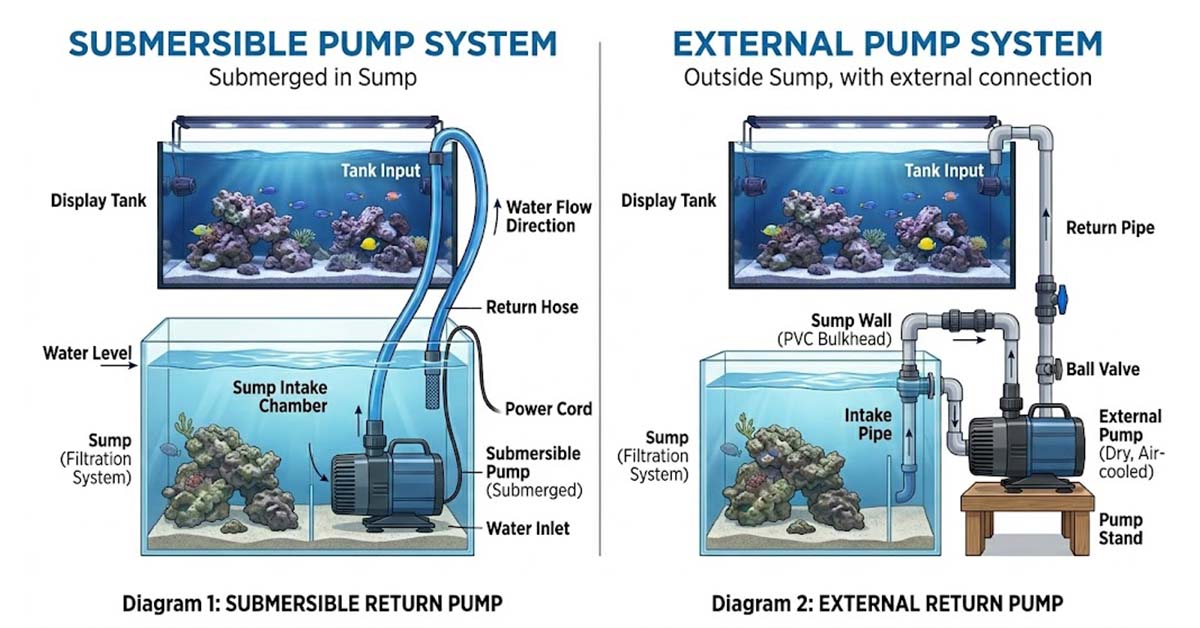
When making your saltwater aquarium return pump selection, you will likely start with internal models. These submersible pumps are favored by most hobbyists because they sit directly inside the sump, making them nearly invisible and saving valuable cabinet space. They are generally much easier to install since they do not require drilling through your glass or using complex bulkheads. However, keep in mind that internal pumps transfer their operational heat directly into the water. In a 200 Liter (53 Gallon) system, this might slightly raise your temperature, which is a factor to consider in warmer rooms. For the majority of home setups, a high-quality internal DC pump is the most practical, space-saving, and leak-proof solution available today.
External Pumps: Maximum Cooling and High Performance
External pumps stay outside the water, offering a distinct advantage for those prioritizing temperature control. By keeping the motor out of the sump, you prevent extra heat from warming up your saltwater aquarium, which can be crucial during hot summer months. While these pumps are often more powerful and durable for very large systems, they do require a more complex plumbing setup involving bulkheads and external piping. This setup increases the risk of external leaks if not maintained properly. However, for massive systems over 500 Liter (132 Gallon), the stability and cooling benefits of an external model often outweigh the installation challenges. Carefully evaluate your available floor space and cooling needs before finalizing this physical pump style.
Optimizing Your Plumbing for Maximum Efficiency
To get the best performance from your saltwater aquarium return pump selection, your plumbing must be optimized. Match the pipe diameter to the pump’s output size, typically around 2.5 cm (1 Inch) for most medium systems. Avoid using sharp 90-degree elbows; instead, use 45-degree fittings or flexible PVC to reduce friction. Using a silicone hose for the first 30 cm (12 Inch) of the return line can also drastically reduce vibration noise. Keeping your plumbing simple and clean ensures that your pump doesn’t work harder than necessary. This not only saves electricity but also extends the life of the motor by preventing excessive back pressure within the return lines.
Return Pump Head Pressure Calculation Guide
Choosing the right return pump for your saltwater aquarium depends on overcoming plumbing resistance. Every vertical inch and elbow fitting slows down the water flow. This resistance is known as head pressure. If you don’t calculate this correctly, your aquarium may suffer from poor turnover rates. Use the following centimeter-based table to determine the total resistance your pump must handle for optimal performance.
Head Pressure Calculation Table
Add up the components of your plumbing using these standard conversion rates to find the total pressure in cm:
| Plumbing Component | Measurement | Calculation Factor | Total Pressure (cm) |
| Vertical Rise | Net cm | x 1 | …….. cm |
| 90° Elbows | Each | x 30 | …….. cm |
| 45° Elbows | Each | x 15 | …….. cm |
| Horizontal Distance | Net cm | / 10 | …….. cm |
| TOTAL PRESSURE | Grand Total | …….. cm |
How to Choose the Right Pump
The total cm value you calculated represents the “Head Height” your pump must fight against. Check the manufacturer’s flow chart to see the actual lite (gallon) per hour output at that specific height. Most pumps list a maximum flow rate at zero resistance, but this drops significantly as water travels through pipes and fittings.
Ensure your chosen pump delivers at least 5 to 10 times your saltwater aquarium volume per hour at your calculated total pressure. Remember that algae buildup inside the pipes will increase resistance over time. Selecting a controllable pump with a slightly higher capacity than your minimum requirement is always a safer choice for long-term stability.
Join the Discussion! Do you have a question or a tip to share about “The Life-Changing Saltwater Aquarium Return Pump Selection Guide” Whether you’re a beginner or a professional, we value your experience—leave a comment below to help our community grow!
For more personalized advice and in-depth discussions, feel free to start your own thread in the Saltwater Aquarium Forum. We’d be happy to help you. Let’s build a better reef together!
Cover Photo Credit: Reef Network
References:
- Bulk Reef Supply (BRS): How To Properly Size A Return Pump For An Aquarium / Last Access Date: 03.03.2026
- Top Shelf Aquatics: How to Choose the Right Return Pump for Your Aquarium / Last Access Date: 03.03.2026
- EcoTech Marine: Vectra DC Pump Technical Specs / Last Access Date: 03.03.2026