


$98.00
Learn about Yasha White Ray Shrimp Goby (Stonogobiops yasha) care, traits, and symbiosis. Explore this stunning nano fish in the Reef Network livestock guide!
Share:
Featured Info
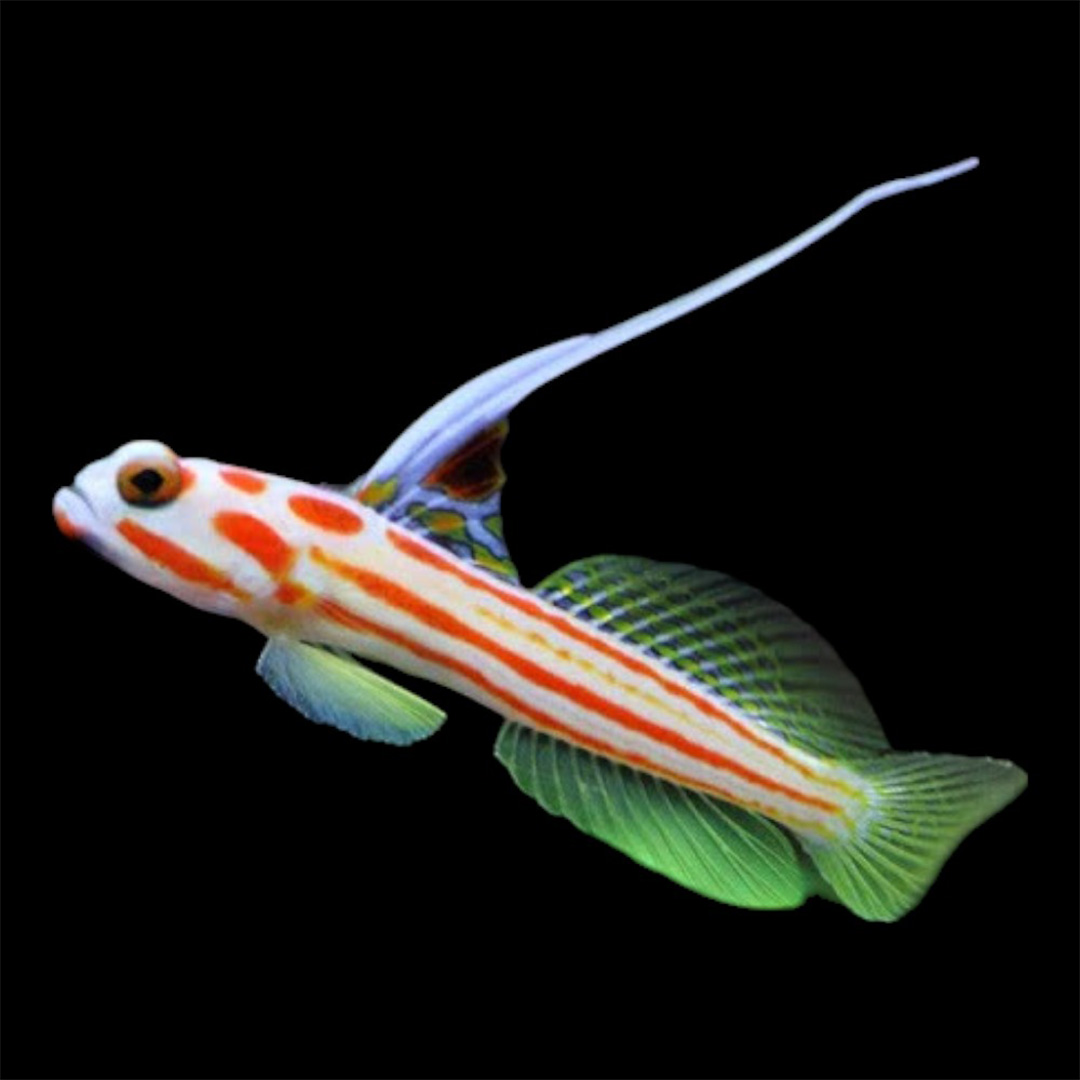
The Yasha White Ray Shrimp Goby (Stonogobiops yasha), a member of the Gobiidae family, is a small but fascinating fish found in the deep coral reefs of the Western Pacific. With its striking red stripes, yellow fins, and distinctive long white dorsal ray, it is a highly desirable choice for reef aquariums, offering both elegance and a unique personality. However, experienced aquarists know that its delicate appearance hides a shy but territorial character. You might be inviting a tiny, colorful sentinel into your tank!
For the Yasha Goby, the ideal water temperature should range between 23-26°C (73-79°F). A minimum aquarium volume of 40-60 liters (approx. 10-15 gallons) is sufficient. It is essential to provide a sandy substrate and rocky crevices where the fish can burrow and hide. Maintain a pH level of 8.1-8.4 and a specific gravity (salinity) of 1.020-1.025. Since they are known jumpers when startled, a tightly fitting lid is mandatory.
The Yasha Goby has a carnivorous diet and naturally feeds on small zooplankton and crustaceans. In an aquarium setting, they can be easily fed with a variety of foods such as mysis shrimp, brine shrimp, and high-quality small pellets or flakes. Ensuring that food reaches the bottom where they reside is important for their health and maintaining their vibrant colors.
This species is famous for its symbiotic relationship with the Alpheus randalli (Candy Cane Pistol Shrimp). They share the same burrow, where the shrimp acts as the bulldozer and the goby acts as the lookout. They can be territorial toward their own kind unless they are a mated pair. It is recommended to keep them with other peaceful and small reef inhabitants. Larger or aggressive fish may cause this shy species to remain permanently hidden.
The Yasha Goby is a species whose breeding in captivity has been documented but remains difficult for the average hobbyist. They form pairs and lay their eggs within the safety of their burrows. While the parents may guard the nest, raising the larvae is extremely challenging due to their tiny size and the need for specific microscopic live foods like rotifers and copepods.
The Yasha Goby is generally a hardy species but can be sensitive to sudden changes in water parameters. Stress from aggressive tank mates or lack of hiding spots can lead to common ailments such as Marine Ich (Cryptocaryon irritans). This fish is not venomous and is completely safe to handle within the aquarium. Their average lifespan is 3–5 years, though they can thrive longer with precise care and a peaceful environment.
Cover Photo: Seahorse Aquariums
References:
Share Your Experiences! If you have kept this species before or if it is currently an inhabitant of your aquarium, please share your tips and experiences with us and fellow aquarists in the comments section below.
Whether you are a novice hobbyist or an experienced aquarist, feel free to start your own thread and ask questions in our Saltwater Aquarium Forum for help, advice, or guidance. We are here for you and more than happy to help!
Share Your Experiences! If you have kept this species before or if it is currently an inhabitant of your aquarium, please share your tips and experiences with us and fellow aquarists in the comments section below.
Whether you are a novice hobbyist or an experienced aquarist, feel free to start your own thread and ask questions in our Saltwater Aquarium Forum for help, advice, or guidance. We are here for you and more than happy to help!
Get in Touch