


$120.00
Discover the Blue Mandarin (Synchiropus splendidus) care guide. Learn about tank requirements, specialized nutrition, and behavior for this stunning reef fish.
Share:
Featured Info
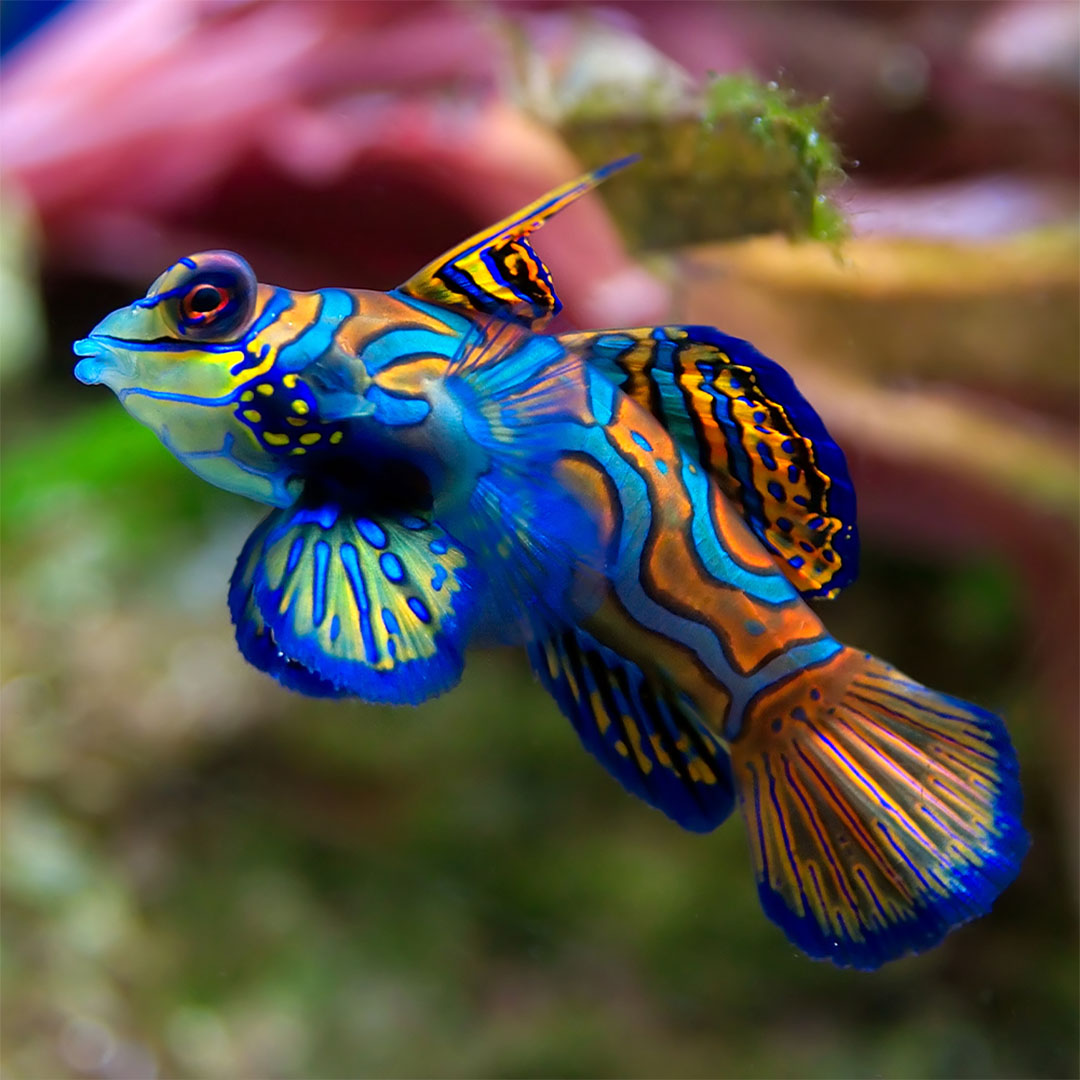
The Blue Mandarin, scientifically known as Synchiropus splendidus and belonging to the family Callionymidae, is widely regarded as one of the most breathtaking inhabitants of the marine aquarium world. Native to the Western Pacific, this dragonet is famous for its intricate, psychedelic patterns and a unique method of locomotion that resembles hovering rather than traditional swimming. Unlike most reef fish, the Mandarin lacks scales and is instead covered in a thick, toxic mucus layer that serves as a primary defense mechanism against skin parasites and potential predators. This species is generally shy and spends most of its time hunting among rocks, showing peak activity levels during the early morning and twilight hours.
To successfully house a Blue Mandarin, a well-established reef system of at least 120 liters is considered the minimum requirement. The key to their survival is not just the volume of water, but the abundance of mature live rock which provides essential hunting grounds and shelter. Water parameters must remain stable, with temperatures held between 24–27°C and a pH range of 8.1–8.4. Maintaining low levels of nitrates and phosphates is crucial, as these fish are sensitive to poor water quality and rely on a healthy ecosystem to support the micro-fauna they prey upon.
The primary challenge in keeping this species is its highly specialized diet, consisting almost exclusively of live copepods and amphipods. In a closed aquarium environment, Mandarins can quickly deplete the natural population of these micro-crustaceans, leading to starvation. It is highly recommended to utilize a refugium or a dedicated pod-culturing system to ensure a continuous food supply. While some specimens can be trained to accept frozen mysis or enriched brine shrimp, providing a consistent source of live prey remains the most reliable way to maintain their long-term health and vibrant coloration.
The Blue Mandarin is an exceptionally peaceful fish that coexists well with other non-aggressive reef inhabitants. However, extreme caution must be taken when housing multiple dragonets together; males are notoriously territorial and will fight aggressively with other males of the same or similar species. They are best kept singly or as a mated pair in larger systems. It is also important to avoid keeping them with fast-moving, aggressive feeders that might outcompete the slow-moving Mandarin for the limited supply of copepods available in the tank.
In their natural habitat, Mandarins engage in a fascinating twilight spawning ritual where the pair rises together in a spiral motion toward the surface to release their gametes. These spawning events typically occur just before complete darkness, and the eggs are released into the water column to drift with the current. While captive breeding was once extremely rare, specialized facilities are now successfully producing captive-bred individuals, which are often hardier and more willing to accept prepared foods than their wild-caught counterparts.
Generally, the Blue Mandarin is a resilient species with a natural resistance to common skin parasites like marine ich, thanks to its thick and distasteful mucus coating. However, they remain highly vulnerable to physical wasting and malnutrition if their caloric needs are not met. A “pinched” appearance behind the head is a critical sign of health decline. With a stable environment, a constant food source, and appropriate tank mates, these captivating creatures can thrive in a home aquarium for 5 to 8 years.
Cover Photo Credit: Lviatour
Kaynakça:
Share Your Experiences! If you have kept this species before or if it is currently an inhabitant of your aquarium, please share your tips and experiences with us and fellow aquarists in the comments section below.
Whether you are a novice hobbyist or an experienced aquarist, feel free to start your own thread and ask questions in our Saltwater Aquarium Forum for help, advice, or guidance. We are here for you and more than happy to help!
Salinity
pH
Alkalinity
Diet
Temperament
Care Level
Breeding
Get in Touch