

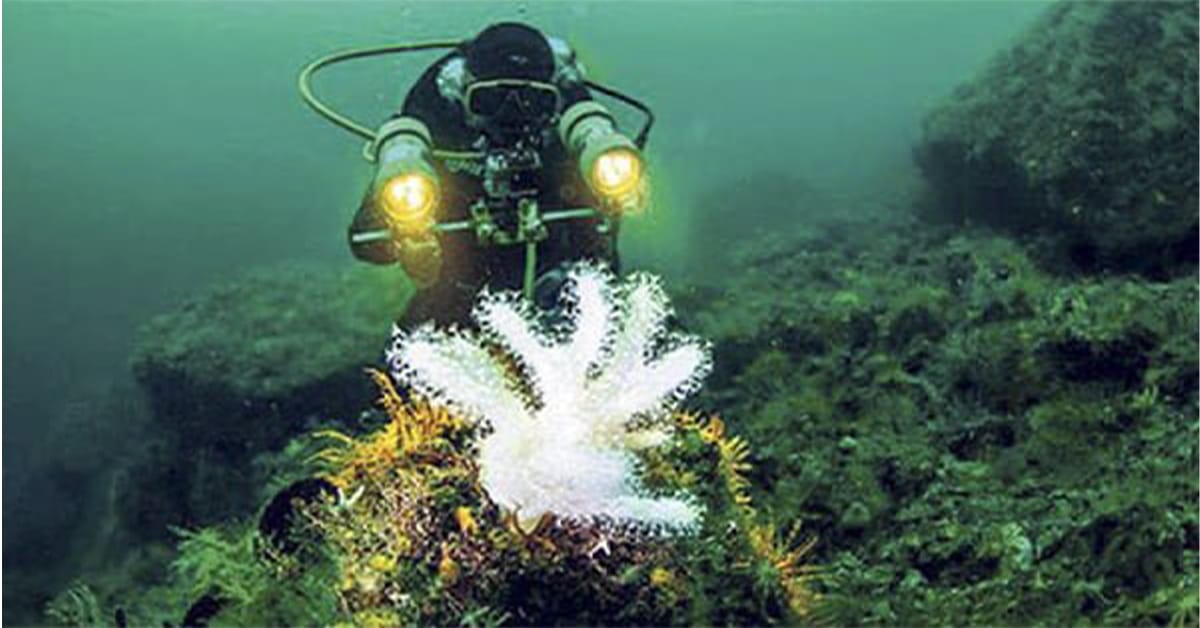

The shores of the Prince Islands are an ideal region to experience the unique structure of the Marmara Sea. While diving off the shores of the Prince Islands, we find the opportunity to observe features of two separate seas together. There is a two-layered current system in the Marmara Sea. While the less salty waters coming from the Black Sea flow from the Istanbul Strait towards the Dardanelles in the upper layer, the salty Aegean waters enter through the Dardanelles and flow towards the Black Sea in the lower layer.
The transition layer where the two layers intersect is scientifically known as the halocline, and popularly known as the “crystal.” In the upper layer, where waters of Black Sea origin are found, the number of species is low—meaning diversity is weak—but their abundance is high. In the lower layer, there is high diversity. Therefore, diving around this region to observe the coral communities on the Prince Islands is like diving into two seas with different characteristics at the same time.
Threats, Status, and Protection
Octocoral corals have a plant-like appearance. In the Marmara Sea, the less salty waters of the upper layer are not suitable for octocoral coral life. In the lower layer, a total of 23 octocoral coral species have been identified in various studies. Among these, 10 species are commonly encountered within the coral communities on the Prince Islands. The fact that the polyps on their bodies are like flowers allows them to take on an appearance as elegant as spring branches.
Indeed, the name of the Anthozoa group, to which corals belong in scientific classification, is derived from the Greek words “anthos” (flower) and “zoa” (animals), meaning “flower animals.” The difference between octocoral corals and other corals is that their flowers, namely the polyps, have 8 tentacles. Many of these corals are among the key species of the Mediterranean’s precious “coralligenous communities.” “Coralligenous communities” are communities living in habitats formed by the accumulation of crustose algae that grow in low-light environments.
The coral communities on the Prince Islands are known as the second most important community in the Mediterranean after seagrass meadows. With their colorful appearance, they possess both unique beauty and high diversity. Especially because they are abundant in the Western Mediterranean, off the coasts of Spain, France, and Italy, but deteriorate quickly under human pressure, they have been given great importance and protected through various conventions. Corals are very abundant within these communities, especially on the Western Mediterranean coasts, and thanks to their bush-like structures, they provide living and spawning areas for other species.
On the Eastern Mediterranean coasts, such as Greece and Turkey, corals are not very common in coralligenous communities. They are rarely distributed in a few places like Ayvalık and Saros Bay. However, in the Marmara Sea, abundances ranging between 3 and 180 coral colonies per 10 square meters can be found. In other words, your chance of encountering beautiful coral communities on the Prince Islands is higher than in the Aegean Sea! From the Mediterranean coasts of Turkey, many species are either not found or exist at very high depths.
Although the presence of corals in the Marmara Sea has been known for a long time, it is not well known among the public. The first person to mention corals in the Marmara Sea was L.F. Marsili, an Italian soldier and naturalist who visited Istanbul in the 17th century. The first species identifications were made in the 19th century, and many more species were reported later; however, studies regarding the distribution and densities of these creatures in Marmara could only be carried out very recently by our team. Octocoral corals can be summarized in 3 groups. The first group, soft corals, has a fleshy structure and forms colonies in the form of encrustations or finger-like protrusions.
In the photographs below, the species named A, B, H, I, and J are the soft corals most frequently encountered within the coral communities on the Prince Islands. The second octocoral coral group is the sea pens. Corals in this group are called sea pens because of their appearance, and there are always appendages emerging from a main axis, similar to bird feathers. A representative of this group is very frequently encountered and found in abundance off the shores of the Prince Islands. This species is Veretillum cynomorium, labeled as C in the figure below.
The third group in octocoral corals is named “gorgonians”; they have bush-like branching and flexible axes within the branches. The gorgonians most frequently encountered as part of the coral communities on the Prince Islands are shown as E, F, D, and G in the image below. Gorgonians are key species in the coralligenous communities mentioned above. Gorgonians such as Paramuricea clavata and Eunicella cavolini, which are among the best-known gorgonian species due to their prevalence in the Western Mediterranean, are also present off the shores of the Prince Islands. However, in the Prince Islands, besides these typical species, there are also much more interesting and surprisingly present species.
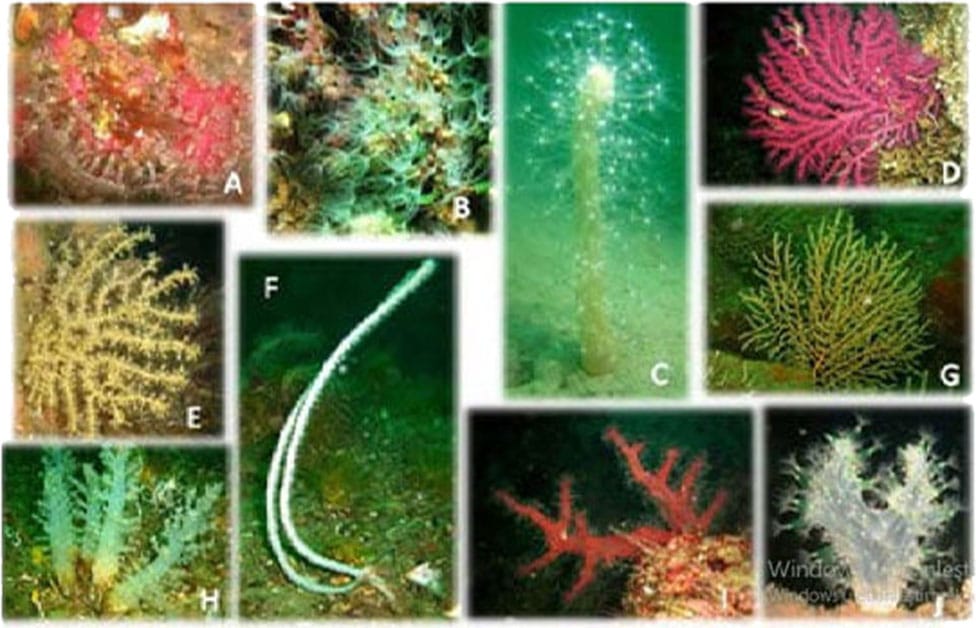
Some species that are found at depths of more than 50 meters and very rarely on the coasts of France, Spain, and Italy or in the Aegean Sea, appear in the Marmara Sea starting from 20 meters and quite frequently: the white bush (Spinimuricea klavereni) and the small gorgonian (Paramuricea macrospina). Gorgonians are among the species that divers in the Mediterranean enjoy seeing the most and are the focal points of scientific studies and conservation plans.
These two gorgonians are Mediterranean endemics—meaning they are found only in the Mediterranean basin in the world—but they are very rarely included in both scientific literature and diving guides because they are found outside of diving depths in the Western Mediterranean. In fact, their photos are hardly even encountered on the internet. However, both are quite common when examining coral communities on the Prince Islands.
We think that the abundance of these two gorgonians in the Marmara Sea is based on the combined effect of several factors. The Marmara Sea has very special oceanographic characteristics, and there is also intense fishing pressure. In the waters below the halocline, or the crystal layer in daily language, salinity and temperature show very little change throughout the year. The waters are cold and dark. This initiates conditions that would only be seen after 50–70 meters in the Mediterranean immediately after the halocline. This situation seems to provide suitable conditions for all gorgonians commonly found in the Mediterranean.
However, on the other hand, there are factors of intense fishing pressure and pollution. This causes the degradation of habitats. It can be estimated that fishing, in particular, has made it difficult for long-lived gorgonians, whose life dynamics are generally quite slow, to survive in Marmara. While nets are being gathered, they get caught in coral branches, damaging and wounding their living tissues. On the other hand, nets that get stuck on the bottom kill the corals underneath and cover the habitat suitable for corals, causing a decrease in the surfaces where these creatures can settle. It is very difficult for these creatures, which already grow quite slowly, to re-settle in the environment, especially while the same fishing pressure continues.
Conservation of Coral Communities on the Prince Islands
In order to protect marine biological diversity, marine habitat types to be represented within the network of marine protected areas (Natura 2000 network) to be created across Europe have been determined and classified within the framework of the European Union (EU) Habitats Directive (92/43/EEC). Coralligenous formations are included under the heading of “Reefs” in the Habitats Directive.
Additionally, an Action Plan adopted by the member countries of the Barcelona Convention aims to protect these communities. Both legal documents require the conservation and monitoring of soft corals and gorgonians, which have an important place within the coralligenous. While the Barcelona Convention is not binding, the Habitats Directive is a binding document; in this respect, it is extremely important to carry out such studies in Turkey as well.
Furthermore, for European Union countries, according to Commission Regulation 1967/2006, which regulates the sustainable harvesting of Mediterranean fishery resources, fishing with trawls, dredges, shore seines, and similar nets must be prohibited on coralligenous communities (Article 4.2). Trawl fishing in the Marmara Sea has been completely prohibited in accordance with Law No. 1380 and Article 24 of the Fisheries Regulation. The most damaging type of fishing identified in our studies has been purse seine fishing.
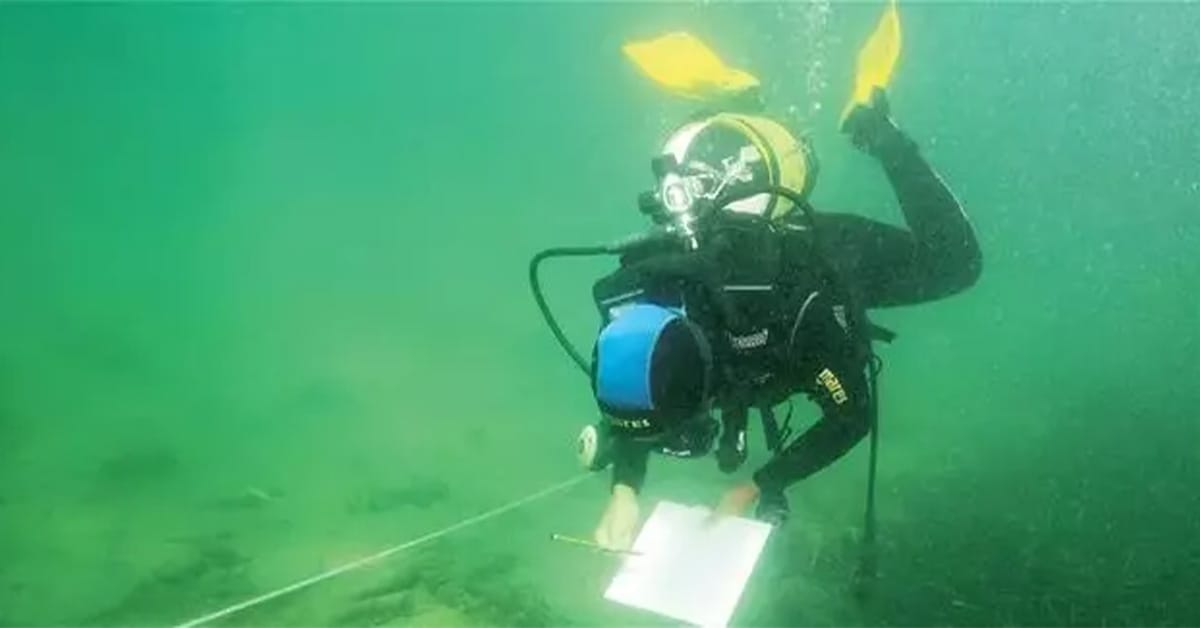
Numerous nets stuck to the bottom have been observed off the shores of the Prince Islands, and the damage they cause to corals has been documented. Purse seine fishing in the Marmara Sea was prohibited by Communiqué No. 2012/65, starting from the coastline between Caddebostan and Maltepe and covering the Prince Islands with a boundary to be drawn from the south of Büyükada. While this situation is a positive development, it does not cover all the distribution areas of coral communities on the Prince Islands and needs to be expanded.
Pollution is another factor affecting corals. Opportunistic algae can use gorgonian and coral branches as a substrate for themselves and cause these creatures to be injured and die. In an environment in good condition, this situation is not encountered much and the coral can compete with the algae. However, when there is pollution in the environment, the ability of corals to compete with these opportunistic algae decreases and the coverage rate of their branches increases. The Marmara Sea, unfortunately, is quite polluted.
Gorgonians such as Paramuricea clavata (red gorgonian) are a good example of species with the characteristics of slow growth, low reproduction, and long life mentioned above. Red corals, which were seen to be quite frequent in videos taken by Mr. Serço Ekşiyan and his friends in the 90s, have now become rare. The gradual decrease in the population of this gorgonian among the coral communities on the Prince Islands is likely due to intense fishing pressure and high pollution factors.
On the other hand, Spinimuricea klavereni and Paramuricea macrospina, which we call white bush and small gorgonian, are species that are resistant to intense sedimentation resulting from high pollution input and grow relatively fast compared to other gorgonians. When the seasonal non-changing and low-light environment of the Marmara Sea comes together with the ecological characteristics of these two species, the reason for their prevalence off the shores of the Prince Islands is understood.
2015: Year of Destruction and Degradation
Until the summer months of 2015, many coral species around the coral communities on the Prince Islands were resisting despite all adversities, and it was possible to see dense communities. However, unfortunately, some recent successive adversities broke the resistance of corals and many other creatures. These elegant creatures, which had somehow made it to 2015 despite gradually decreasing, began to die in the summer months as the suspended solid matter, which increased excessively in the water column, settled.
The source of this sediment may be the bottom muds left around the Islands during the rehabilitation of Kurbağalı Stream and Kemikli Stream, the settling of red-tide increases in the spring months of 2015, the dumping of rocks blasted during the reorganization of the shores of Yassıada into the sea, and coastal filling works that have increased in general along the shores of Istanbul.
As the sediment increased, creatures that feed by consuming organic matter suspended in the water, such as corals, sponges, and bivalve mollusks called Pinna, suffocated and died; some also fell ill along with falling oxygen levels and were covered with bacteria and fungi. Nowadays, it is not possible to see sea pens in the sands of the Islands, nor soft corals on the rocks. Skeletons of some of the gorgonians can still be seen.
Nevertheless, one should not despair. Soft corals and sea pens will return. There are still those among the gorgonians who resist the dance. Most gorgonians are slow-growing, long-lived creatures with low reproductive capacity. Therefore, their return will take a very long time. Still, we must give them this opportunity and protect their habitats to preserve the coral communities on the Prince Islands.
What Should Be Done?
Marmara is a unique sea, and we must appreciate its value. For this reason, we recommend that the area closed to purse seine fishing be expanded to include the southern shores of the Prince Islands, along with Yassıada, Sivriada, and Balıkçı Island (Neandros), and that old purse seine nets found on the bottom be cleaned.
On the other hand, throughout the Marmara Sea, the treatment and discharge of terrestrial and industrial wastewater into the sea via deep-sea discharge should be better planned and implemented to protect the future of coral communities on the Prince Islands.
Join the Discussion! Do you have a question or a tip to share about “Coral Communities on the Prince Islands” Whether you’re a beginner or a professional, we value your experience—leave a comment below to help our community grow!
For more personalized advice and in-depth discussions, feel free to start your own thread in the Saltwater Aquarium Forum. We’d be happy to help you. Let’s build a better reef together!
Cover Photo Credit: