

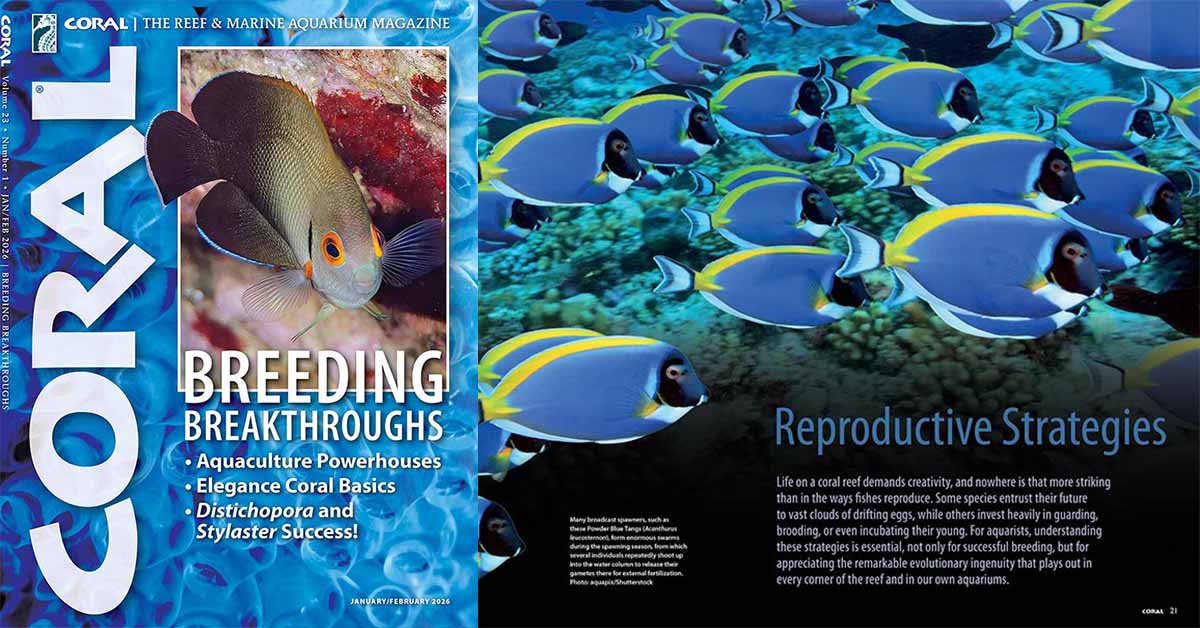

In the first issue of CORAL Magazine in 2026, titled Breeding Breakthroughs, Editor Mark Levenson focuses on the hobby’s transition from mere “maintenance” to “active breeding.” Highlighting that over 470 marine fish species have now been successfully captive-bred, Levenson announces the world’s first successful breeding reports for the deep-water Rose Anthias and the Pearlscale Angelfish.
While Levenson explores the large-scale commercial techniques of De Jong Marinelife and expert Tom Bowling, he also provides hobbyists with home-breeding recipes that can be implemented using everyday equipment. Additionally, by sharing observations of a massive Vermetid snail discovered in the Maldives, Levenson emphasizes that aquaculture is the definitive future of the reef-keeping hobby.
An Underwater Artistic Traffic Jam
In this segment, Editor Mark Levenson explores the REEFLINE project in Miami Beach, a hybrid reef that merges ecology with art. As a significant highlight of Breeding Breakthroughs, the “Concrete Coral” installation features 22 concrete car sculptures designed to serve as a new habitat for marine life.
Levenson emphasizes the work of Science Director Colin Foord, whose lab cultivated over 2,200 gorgonians specifically to be outplanted onto these structures using the innovative “Coral Lok™” system. This $1.5 million artificial reef is not just a tourist attraction; it is a massive real-world example of Breeding Breakthroughs, demonstrating how corals can rapidly colonize urban-inspired structures. With Phase Two commencing in 2026, the project aims to extend this living corridor to 11 km.
An Anime Hero from the Deep Sea
In this captivating segment, Alex Rose introduces the Vanderhorstia supersaiyan, a new goby species discovered at a depth of 210 meters. Within the context of Breeding Breakthroughs, Rose highlights how such exotic discoveries represent the next frontier for both science and potentially the future of specialized aquaculture.
Rose notes that the fish earned its name from the striking yellow stripes reminiscent of the “Super Saiyan” transformation in the Dragon Ball Z anime. Emphasizing that this discovery in the “twilight zone” was made possible through advanced ROV technology and specialized grants, Rose points out that even in 2025, the ocean’s transition zones still hide extraordinary biodiversity waiting to be explored.
Reef Visions
In this showcase, Editor Matt Pedersen displays the latest gems of the aquarium hobby. Aligning with the Breeding Breakthroughs theme, the spotlight is on Poma Labs’ hybrid angelfish—some of which are no longer available from the wild—and Biota’s tank-cultured Elegance Corals, which are far hardier and more sustainable than wild-collected specimens.
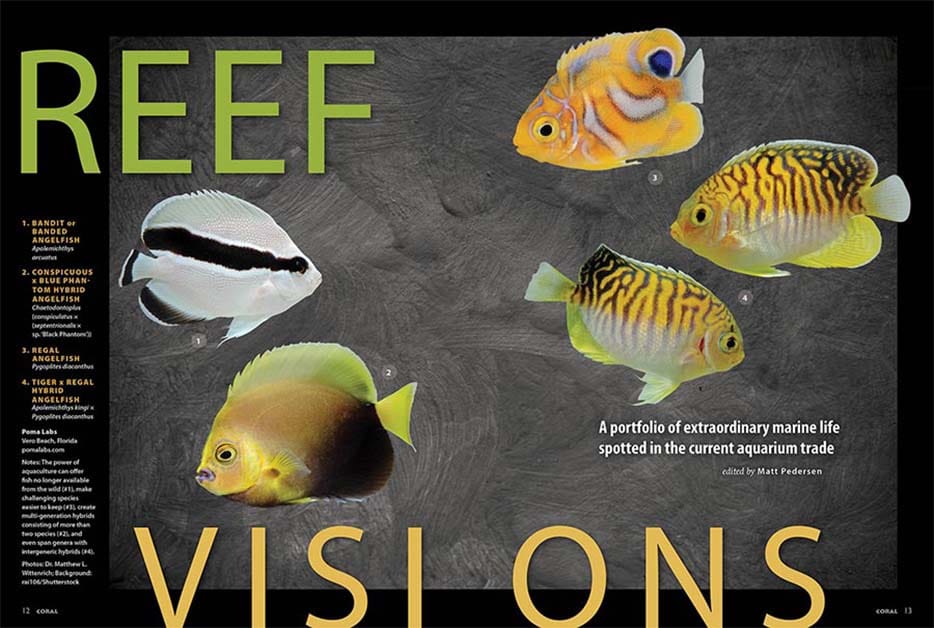
Pedersen highlights how aquaculture not only aids conservation but also introduces rare species to the hobby, such as the deep-water Bennett’s Anthias and the visually striking Blackpink Oxypora. This portfolio, curated by Pedersen, serves as definitive proof of how sustainable breeding breakthroughs are making “impossible” and rare marine life accessible to hobbyists in 2026.
Survival Strategies on the Reef
Dr. Dieter Brockmann details the two primary strategies reef fishes use to ensure species survival: “quantity-based” broadcast spawning and “quality-based” brood care. Within the framework of Breeding Breakthroughs, Brockmann explores a spectrum ranging from Tangs that release millions of eggs into currents to Seahorses and Cardinalfish that protect their young in pouches or mouths.
The article emphasizes the balance between the energy cost of parental care and the survival rate of offspring. Highlighting extreme examples like live-bearing sharks and embryonic cannibalism, Brockmann showcases nature’s ruthless yet efficient evolutionary solutions. He concludes that understanding these reproductive blueprints is essential for both successful captive breeding and appreciating the immense biological ingenuity present in our oceans.
Portrait of a Breeding Legend
In this autobiographical essay, world-renowned fish producer Tom Bowling recounts his inspiring journey from his childhood fascination with guppies to building a vast breeding empire like Biota. In keeping with the theme of “Breeding Breakthroughs,” Bowling shares his historic achievements, including seahorse breeding, the production of thousands of pellet-eating Mandarinfish, and the world’s first captive-bred Borbonius Anthias. One of the most interesting anecdotes is about a customer who called into his shop early in his career saying, “My seahorse doesn’t get along with my Japanese fish.” This is a striking example of the lack of knowledge within the hobby itself.
Bowling announces his return to active breeding with his new venture, Australia Bay Aquaculture, leaving behind the complexities of corporate management. The essay details critical technical aspects of wild egg collection and the “domestication” of challenging deep-sea species for aquarium environments. His goals for 2026 include bringing more resilient and sustainable species to the home aquarium market.
Bowling’s anecdote about the “seahorse and goldfish” is the clearest proof that ignorance stemming from misinformation knows no place or time. Especially today, it is thought-provoking that large artificial intelligence tools—which are lauded as advanced but are also known for their potential to hallucinate or spread misinformation—are poised to lead the way in this regard.
A Fluorescent Miracle from the Deep Sea
In this landmark article, Kevin Barden shares the world’s first successful captive-breeding of the Rose Anthias (Odontanthias katayamai), a monumental milestone within the Breeding Breakthroughs theme. Barden details how this ultra-rare deep-sea species, living below 600 feet and possessing spectacular fluorescent pigments, was transformed from an “impossible dream” into a reality.
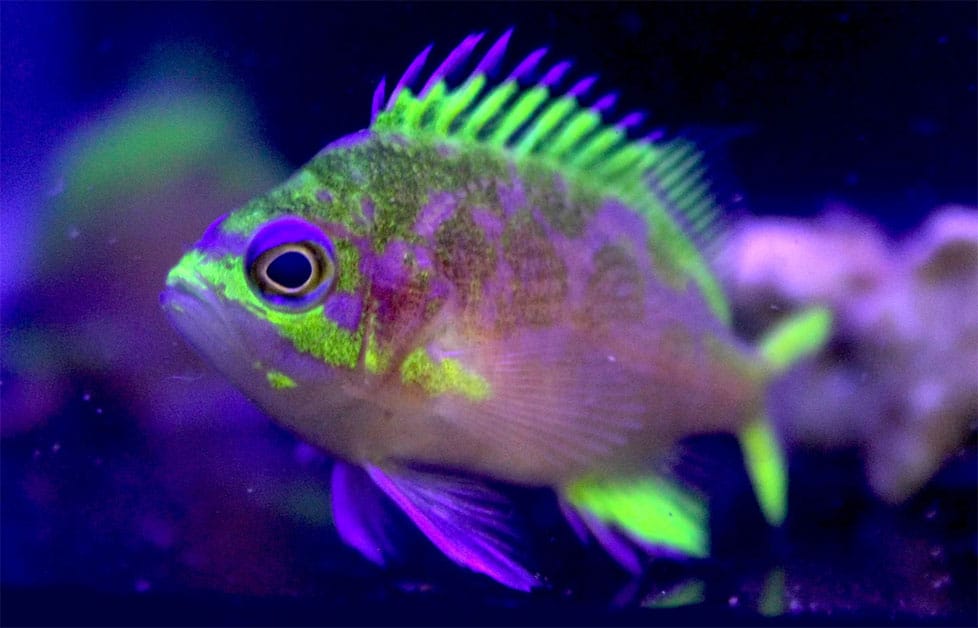
Barden explains how Surge Marine Life overcame the technical hurdles of adapting a deep-water species to aquarium conditions. He highlights that these captive-bred juveniles are far more robust than wild-caught specimens, specifically noting their readiness to accept pellet foods and adaptation to standard reef temperatures. The production cycle planned for 2026 offers great hope for the sustainable future of these rare gems.
Researching various websites, it is hardly surprising to find this fish retailing between $5,999.00 and $15,999.00. Whether you are seeking a lucrative new venture or a formidable professional challenge, this article provides extensive technical insights. You can find the full details in the CORAL Magazine / Breeding Breakthroughs Jan/Feb 2026 issue.
Unlocking the Home-Bred “Species First”
In this article, Matt Pedersen, Fred Shopnitz, and Dr. Cortney Ohs discuss a historic achievement at the University of Florida’s IRREC laboratory: the world’s first captive breeding process of Pearlscale Angelfish (Centropyge vrolikii). The paper presents a chronology of the “Breeding Breakthroughs” process, from Martin Moe’s pioneering work in 1977 to the present day, while also serving as a technical guide on how professional methods can be adapted to a home environment.
The authors highlight the importance of larval rearing container design (Black Round Tubs – BRTs) and the live food chain (copepods and phytoplankton), which are major obstacles in angelfish breeding. The article not only reports a scientific achievement but also offers an inspiring call to action, demonstrating that with the right equipment and patience, a hobbyist can achieve a “world first” in their own basement. As we enter 2026, they note that such successes will ensure a healthier, dry-food-accustomed, and “reef-friendly” market for the hobbyist.
Frankly, the fact that even a professional laboratory needs massive 1,600-liter tanks to spawn these fish proves the high level of technical preparation required. If you’re going to attempt this at home, you’d better start making space for copepod production and live algae culture now; because the secret to success lies in those fresh copepods and the patient attention to detail.
A Visit to De Jong Marinelife, One of the Giants of European Aquaculture
Following Interzoo 2024, Dr. Dieter Brockmann visits De Jong Marinelife in Spijk, Netherlands, one of Europe’s largest marine livestock wholesale and breeding facilities. This in-depth interview with Tom Verhoeven, head of Aquaculture Science & Veterinary, reveals the transformation of an import giant into a sustainable, science-driven breeding powerhouse.
Verhoeven shares his journey from childhood hobbyist to Master’s level marine biologist while detailing the facility’s sophisticated infrastructure, including solar energy use and cooling systems powered by 100-meter-deep groundwater. The heart of the campus, the Fish A.R.C. (Fish Aquaculture Research Center), stands out with its capacity to produce over 20,000 fishes per month. The breeding of rare species like Gramma dejongi and collaborations with public aquariums through initiatives like EMABI highlight the breadth of their sustainability vision.
In summary, this visit demonstrates that the future of the marine aquarium hobby depends on scientifically based local production rather than imports. De Jong’s vision, along with his own academy and research center, seems to be evolving into a comprehensive knowledge campus.
A Nano Reef That Shines
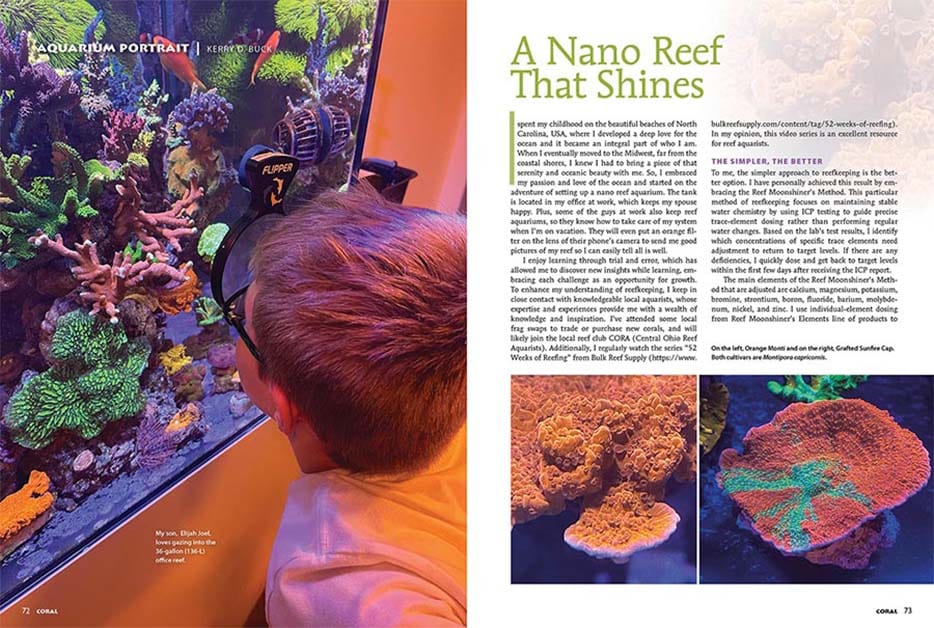
Kerry D. Buck shares the “simplicity first” philosophy and technical details behind the minimalist nano reef aquarium located in his office. Utilizing the Reef Moonshiner’s Method, which relies on ICP testing and precise trace-element dosing rather than regular water changes, Buck prefers manual testing and daily dosing to maintain stability. By choosing a bare-bottom setup and a minimalist aquascape (LifeRock Reef Tree), he achieves high flow rates for efficient nutrient management.
The article also highlights a grueling nine-month battle against a Montipora-eating nudibranch infestation that occurred despite careful dipping, underscoring the vital role of patience in the hobby. Buck attributes his success to strong flow, the use of a CO2 scrubber, and respecting the time required for a system to mature. Sharing this passion with his 10-year-old son, his primary advice to beginners is: “Patience, and keep your hands out of the tank.“
Ozone—Yay or Nay?
Dr. Dieter Brockmann explores the fundamentals of ozone use in reef aquariums. Ozone ($O_3$) is a powerful tool that, through its high oxidative potential, eliminates yellowing compounds in aquarium water, increases light penetration, and boosts skimmer efficiency by an impressive 200% to 400%. Additionally, it ensures high oxygen saturation within the water column.
However, the author issues stern warnings regarding the toxic nature of ozone. This comprehensive guide emphasizes the absolute necessity of passing both water and exhaust air through activated carbon to prevent unreacted ozone from harming both marine life and human health—and covers much more.
Elegance Coral Spotlight (C. jardinei)
Dr. Dieter Brockmann and the CORAL staff take a close look at one of the most aesthetic yet controversial species in the aquarium world: the Elegance Coral. This comprehensive guide provides vital information ranging from its natural habitat conditions to delicate placement strategies in the aquarium. The article explores why the coral’s skeletal structure evolved for sandy substrates and why diseases like Elegance Coral Syndrome (ECS) are more prevalent in specimens from specific geographic regions.
But beware! This guide—covering all this and much more—details how a species once considered “bulletproof” can rapidly decline under incorrect flow or lighting, explains the hidden dangers that cause tissue detachment, and serves as an essential resource for sustainable reefkeeping.
Success with Stylaster and Distichopora NPS Lace Corals!
In this eye-opening interview, Florian Gaudig shatters conventional wisdom by successfully maintaining non-photosynthetic hydrocorals—such as Stylaster and Distichopora, long considered impossible to keep—in a specialized 8-liter system. Identifying light as the primary cause of death for these deep-sea organisms in typical reef tanks, Gaudig mimics their natural habitat by keeping the system in total darkness throughout the day and stabilizing temperatures between 18–20°C using custom chillers.
Since these species possess naturally colored skeletons that remain vibrant even after death, the aquarist monitors their health through microscopic polyp extension, basing his success on heavy water changes and a natural “marine snow” cycle rather than traditional methods. Sharing the formula for keeping the forbidden beauties of the deep sea at home, Gaudig details the technical nuances and the results of years of patient observation that push the boundaries of the hobby in this exclusive conversation.
CORAL Magazine is one of the world’s leading print publications for the Saltwater Aquarium industry. If you’d like to subscribe and read all the content, you can start your Subscription Here. You can find the previous issue, Mutual Relations / CORAL Magazine / November-December 2025 Review Here! We’re eagerly awaiting the next issue!
Join the Discussion! Do you have a question or a tip to share about “Breeding Breakthroughs / CORAL Magazine Review” Whether you’re a beginner or a professional, we value your experience—leave a comment below to help our community grow! For more personalized advice and in-depth discussions, feel free to start your own thread in the Saltwater Aquarium Forum. We’d be happy to help you. Let’s build a better reef together!
Cover Photo Credit: Reef Network
References:
- CORAL Magazine: Breeding Breakthroughs / Last Access Date: 16.01.2026